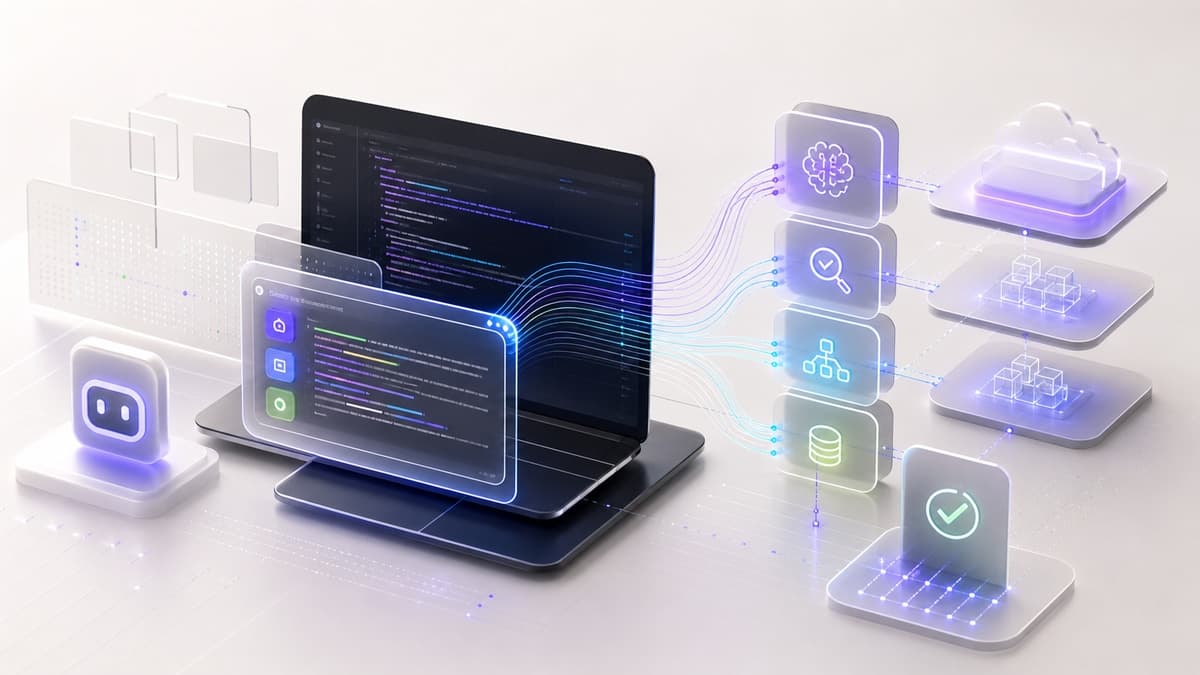
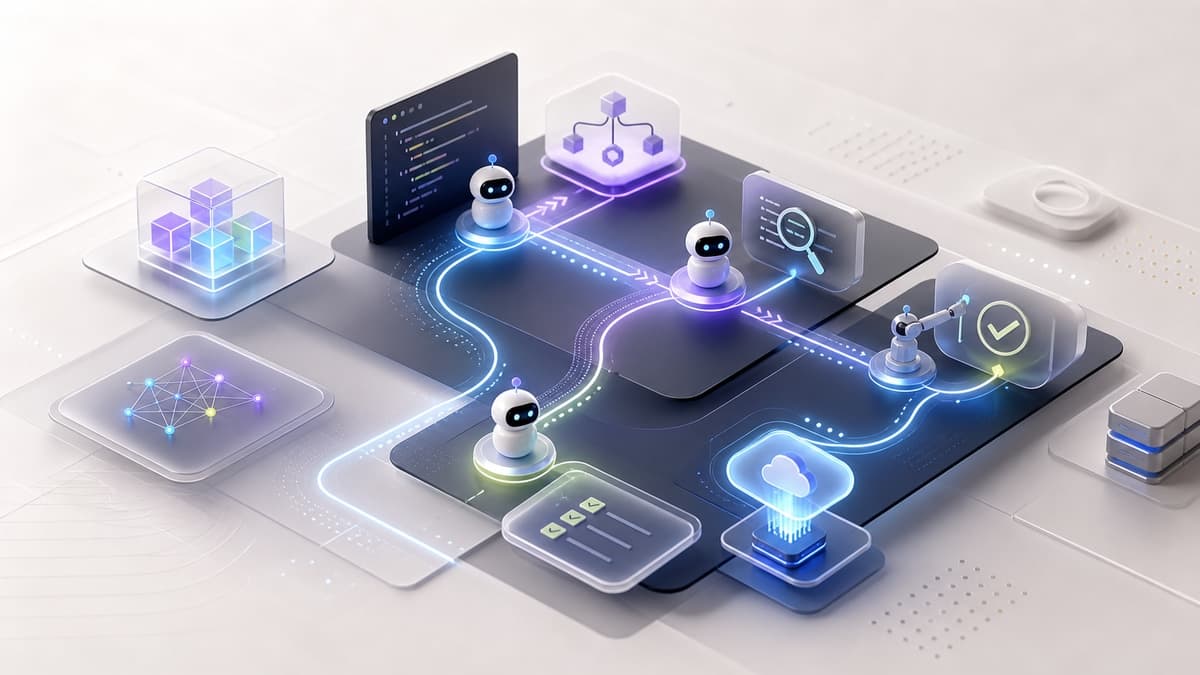
We've moved past autocomplete. In 2026, AI doesn't just suggest the next line of code — it plans entire features, writes the implementation across multiple files, runs tests, finds bugs, and fixes them. This is agentic AI, and it's fundamentally changing how software gets built.
What Makes an Agent "Agentic"?
Traditional AI coding assistants (Copilot, Tabnine) are reactive — you type, they suggest. Agentic AI systems are proactive:
- Goal understanding: The agent reads a task description or PRD.
- Planning: It breaks the work into steps and creates an implementation plan.
- Execution: It edits files, installs dependencies, writes tests.
- Self-correction: When tests fail, it reads the error, diagnoses the issue, and fixes it.
- Verification: It validates the output against the original requirements.
This is fundamentally different from "smart autocomplete." This is a reasoning loop.
Real-World Impact on Development Workflows
After using agentic AI tools extensively in production projects, here's what I've observed:
What Agents Do Well
- Boilerplate acceleration: CRUD endpoints, form validation, and routine auth wiring can move faster when the patterns are already clear.
- Refactoring support: Agents are useful for broad mechanical edits when tests, type checks, and human review stay in the loop.
- Test generation: Given existing code, agents can draft useful test coverage and edge cases for a reviewer to refine.
- Bug diagnosis: Error traces become easier to investigate when the agent can search the codebase and propose likely causes.
Where Humans Still Win
- Architecture decisions: Should we use microservices or a monolith? Agents don't have business context.
- Creative problem solving: Novel UX patterns, unconventional optimizations.
- Ethical judgment: What data should we collect? What biases exist in the training data?
The Developer's New Role
I think of it as evolving from "code writer" to "AI orchestrator." My workflow now looks like:
- Define the requirements clearly.
- Set guardrails (coding standards, security policies).
- Let the agent execute.
- Review, audit, and refine.
The developers who thrive in 2026 aren't the fastest typists — they're the best communicators and the sharpest reviewers.
Key Skills for the Agentic Era
- Prompt engineering: Specificity in task descriptions directly impacts agent output quality.
- Code review mastery: You're reviewing more code than ever before, and most of it was written by AI.
- System design: Architecture is the one thing agents can't reliably do. Double down on this skill.
- Testing strategy: Define the tests first, and agents become drastically more effective.
The Bottom Line
Agentic AI is not replacing developers. It can reduce the tedious parts of development when requirements are clear and verification is strict. The engineers who learn to work with agents — treating them as junior collaborators that need direction, review, and tests — can increase throughput without lowering quality.
The future isn't fewer developers. It's more ambitious projects with the same team.
Keep the Thread Going
- Service path: AI SEO Systems
- Related read: AI-Driven Development: From Copilot to Agents
- Related public work: Husn Spa
- Ready to scope your own version? Start a project