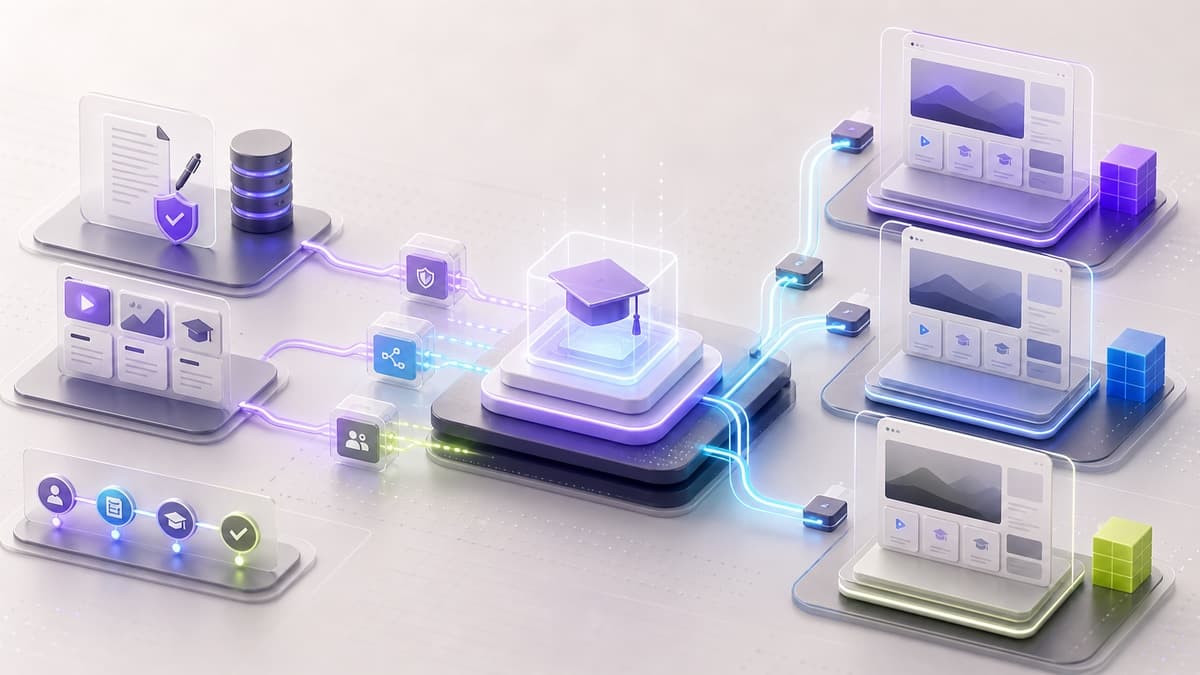

With improved WebAssembly support and mature edge runtimes, the browser and the network edge are now legitimate compute surfaces.
That does not mean every workload belongs there. The best edge and Wasm decisions start with latency, privacy, payload size, and operational risk.
AI Inference in the Browser
Thanks to browser-friendly model runtimes and specialized Wasm builds, smaller AI models can run directly in the browser.
- Privacy First: Data never leaves the user's device.
- Zero Latency: No round-trip to an API server.
- Offline Capable: Works without an internet connection.
This is strongest for focused tasks: image preprocessing, document extraction, lightweight classification, vector math, media transforms, and privacy-sensitive previews. It is weaker when the model is large, the user's device is underpowered, or centralized observability is required.
Edge First Architecture
Traditional server applications are giving way to globally distributed functions. Your API no longer lives in "us-east-1." It lives everywhere.
- Request hits nearest edge node.
- Function executes instantly (cold starts < 50ms).
- Data reads from a specialized edge-replicated database.
This architecture is not just fast; it's resilient.
When Edge Is the Wrong Choice
Edge functions are excellent for request shaping, personalization, redirects, authentication checks, and fast reads from nearby data. They are not always right for heavy writes, long-running jobs, complex database transactions, or workloads that need a full Node.js runtime.
Use edge when the request is latency-sensitive and the data dependency is close to the user. Keep deeper business operations in a regional serverless function, queue, or worker where retries, logs, and database access are easier to reason about.
Why Wasm Matters Now
Browser support is universal. Tools like Rust and Zig compile to highly optimized Wasm binaries. Whether it's video processing (FFmpeg.wasm) or complex data analysis (Polars), JavaScript is no longer the bottleneck for heavy lifting.
The line between web app and native-style capability is thinner, but the tradeoff is still real. Wasm adds build complexity, binary payloads, and debugging overhead. Use it when the performance gain is meaningful enough to justify that extra surface.
Production Checklist
Before shipping edge or Wasm-heavy architecture, verify:
- The public page still renders useful crawlable HTML.
- Large binaries are lazy-loaded and cached intentionally.
- Sensitive user input is not written to logs or analytics payloads.
- Browser fallback states exist for unsupported devices or blocked workers.
- The edge runtime has the APIs your code actually needs.
- Monitoring separates browser, edge, and regional server failures.
A Practical Decision Rule
Use the browser when the work benefits from staying on the user's device: previews, media transforms, privacy-sensitive inputs, and offline-friendly helpers. Use the edge when a fast answer depends on request context, geolocation, authentication state, redirects, or lightweight personalization. Use a regional server when the work needs durable writes, queue retries, large dependencies, or database transactions.
That split keeps the public page understandable. A service page or article can stay mostly static, an interactive estimator can load only when needed, and deeper product operations can run where observability and recovery are stronger.
Keep the Thread Going
- Service path: Web Apps + PWAs
- Related read: Next.js 16 and the Post-RSC Era of App Architecture
- Performance guide: Zero-Bundle Thinking for Faster Web Experiences
- Related public work: MintoCrypto
- Ready to scope your own version? Start a project