Modern sports dashboards are often plagued by identical problems: slow page loads, stale stats, high API costs, and visual clutter. When a product needs to process live-game context, market signals, and model output, a naive architectural approach can crash under rate limits and slow database lookups.
The product constraints behind this article make a useful architecture pattern: keep public reads fast, move expensive refresh work out of the request path, and keep authenticated research tools away from indexable marketing pages.
Here is the safe version of the blueprint.
The Architecture: Live Data without the Latency
In sports prediction applications, the temptation is to pull data live from external APIs on every single user request. However, external sports APIs are notorious for slow response times (often exceeding 1.5 seconds) and restrictive rate limits.
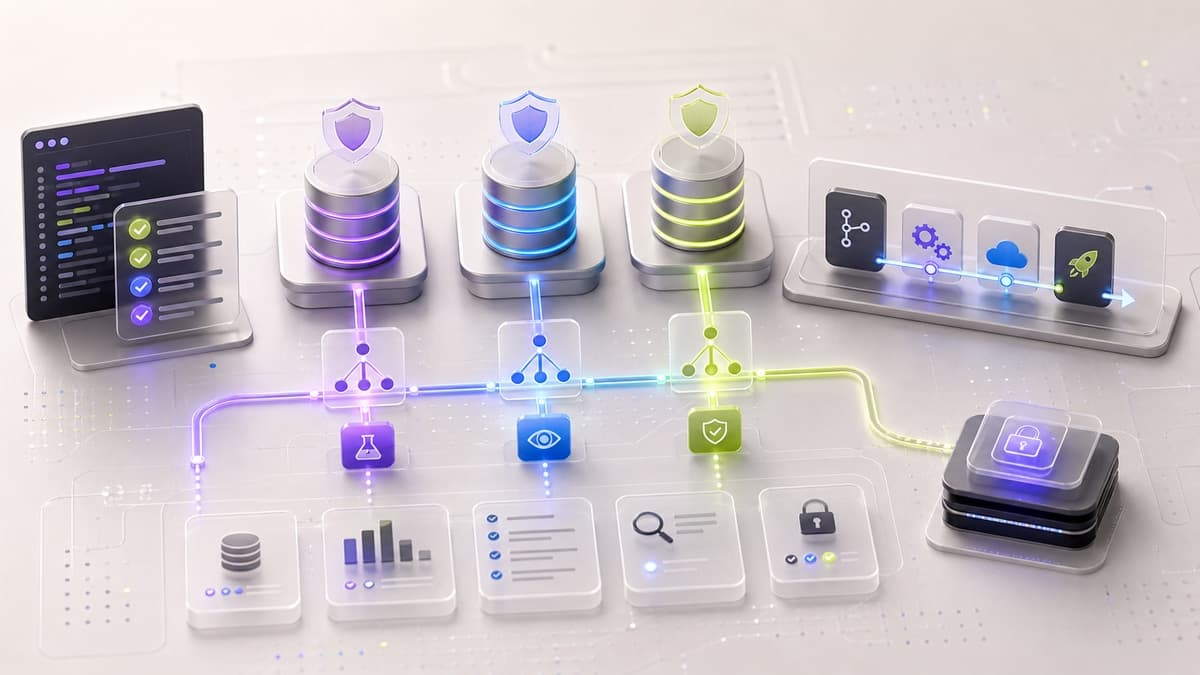
To overcome this, the app used a decoupled Snapshot Cache design. Background refresh jobs gather upstream data, normalize it, generate projection snapshots, and publish only the validated state that the dashboard can read quickly.
Under this pattern:
- Background workers pull the approved schedule, team, player, and market context needed by the product.
- The data is normalized, and our AI projection models generate snapshots.
- These snapshots are written to a serverless Postgres layer through environment-scoped connections and transaction-safe updates.
- When a user loads the research feed, the app reads the latest approved snapshot instead of waiting on every upstream provider.
Hardening the Cache Layer
Serverless storage works well for this pattern when connection boundaries, refresh jobs, and read paths are explicit. The important decision is not the vendor name. It is the separation between refresh writes and public reads.
To keep queries lightning fast, we optimized snapshot reads around game day, player/team identifiers, confidence scoring, and market context. The public lesson is the data-access pattern, not the exact schema or query shape: publish a small approved snapshot, index the access path users actually hit, and keep refresh writes separate from public reads.
By decoupling database population from client route evaluation, the app can avoid making every user request dependent on third-party availability. If an upstream provider returns an error or rate limits a refresh, the dashboard can serve the last validated snapshot and mark freshness clearly.
Authentication & User Context
Secure user boundaries are essential when people personalize dashboards, track active research, or save projection parameters. The public takeaway is to keep private research actions behind authenticated routes and keep marketing/support pages crawlable.
That split also protects the system from high-frequency anonymous requests. Public pages can explain the product, while authenticated surfaces enforce rate limits, ownership checks, and audit trails.
Designing a Quiet Research Interface
In sports analytics, screens are notoriously cluttered, bright, and exhausting to read. To deliver a premium, high-focus research workspace, we used a quiet forest-toned design system with restrained contrast, clear state language, and fewer decorative distractions.
The interface principles are safer to publish than the exact design system:
- dark surfaces with enough contrast for long research sessions
- one accent system for confidence and state
- tabular typography that keeps numbers scannable
- restrained motion that supports focus instead of decoration
- empty, stale, and uncertain states that tell the truth
Every projection card was designed to surface four signals quickly: the market line, the model projection, the confidence state, and the reason a user should care. That is more useful to readers than publishing component code, and it avoids leaking implementation details from a private prototype.
Production Takeaways
The build reinforced several critical principles of modern web app engineering:
- Serve Caches, Calculate Offline: Never force client requests to wait for third-party networks. Live sports data and predictive AI outcomes are perfect candidates for scheduled snapshots.
- Keep the Interface Quiet: If your dashboard serves dense data tables, reduce the visual noise. Avoid flashing animations, heavy gradients, or excessive layout changes. Let pure typography and balanced contrast do the heavy lifting.
- Database Security is Non-Negotiable: When building web apps on serverless Postgres, clamp down on open connections and rate-limit sensitive query paths using fast, edge-based authentication.
Keep the Thread Going
- Service path: Custom Web Development
- Related read: Cache-First Architecture for AI Projection Apps
- Related public work: ParlAi
- Ready to scope your own version? Start a project